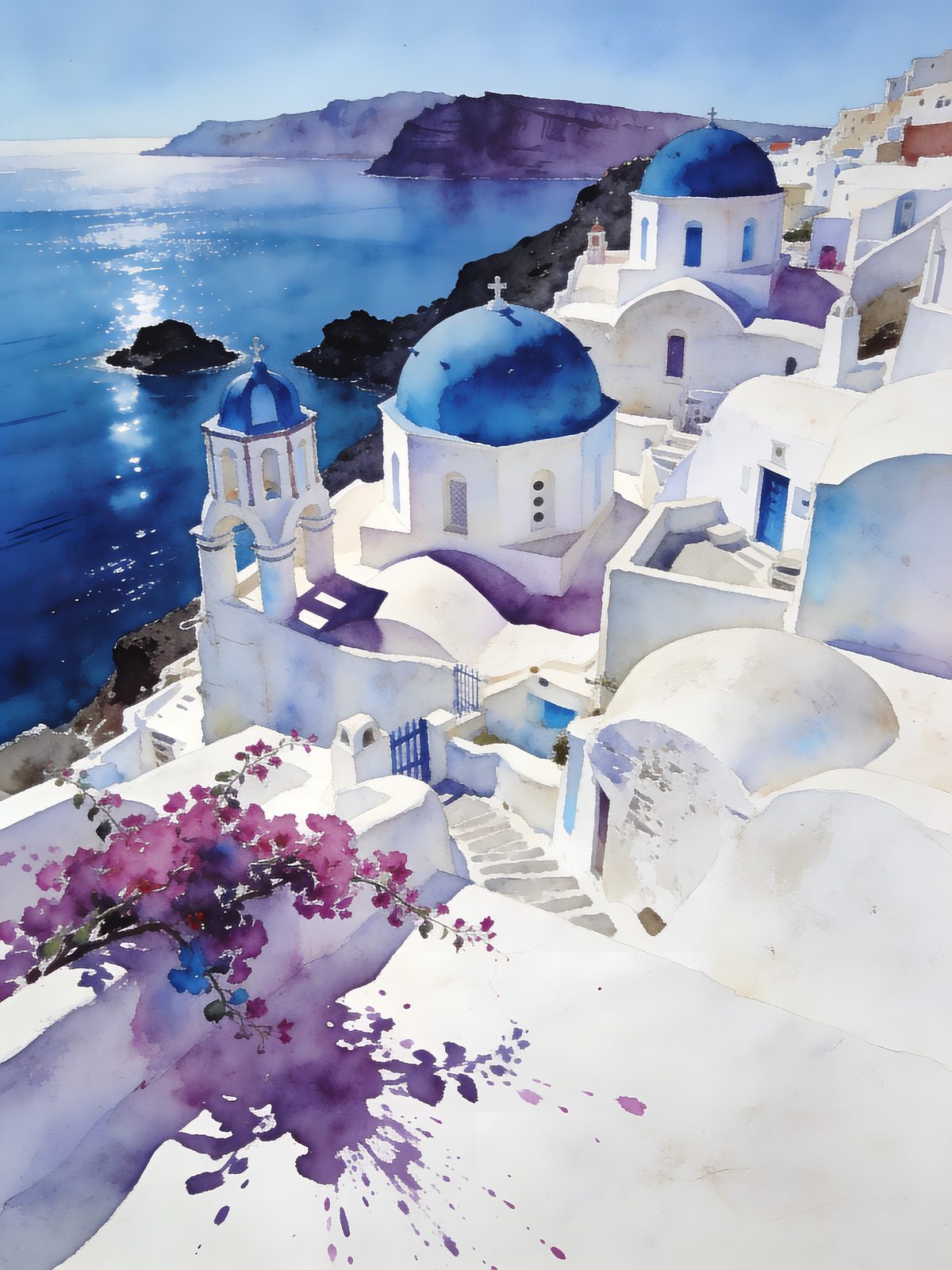
You have a thousand photographs of Santorini on your phone. The white domes. The caldera at sunset. The narrow steps down to Ammoudi Bay. You took them all in the space of three days, and you have not looked at most of them since. This is not a failing of photography. It is a failing of how memory works — and it is the reason watercolor painting captures the truth of a place in a way that no camera can.
Memory doesn't work in high resolution
Neuroscience tells us something that artists have understood for centuries: the brain does not store memories like a hard drive stores photographs. It stores impressions. When you remember Santorini, you do not recall the exact number of steps on that staircase, or the precise shade of blue on the third dome from the left. You remember warmth. You remember the way the white walls seemed to glow from within at five in the evening. You remember the sound of the wind and the colour of the Aegean as a single, fused sensation.
Watercolor painting mirrors this process with uncanny precision. The medium is built on soft edges, on pigment that bleeds and blooms across wet paper, on luminous colour that comes from light passing through transparent washes rather than bouncing off opaque surfaces. A watercolor of Santorini does not try to record every architectural detail. It captures the feeling of the light — the golden warmth, the mineral blue, the dissolving edges where sky meets sea.
The physics of light on paper
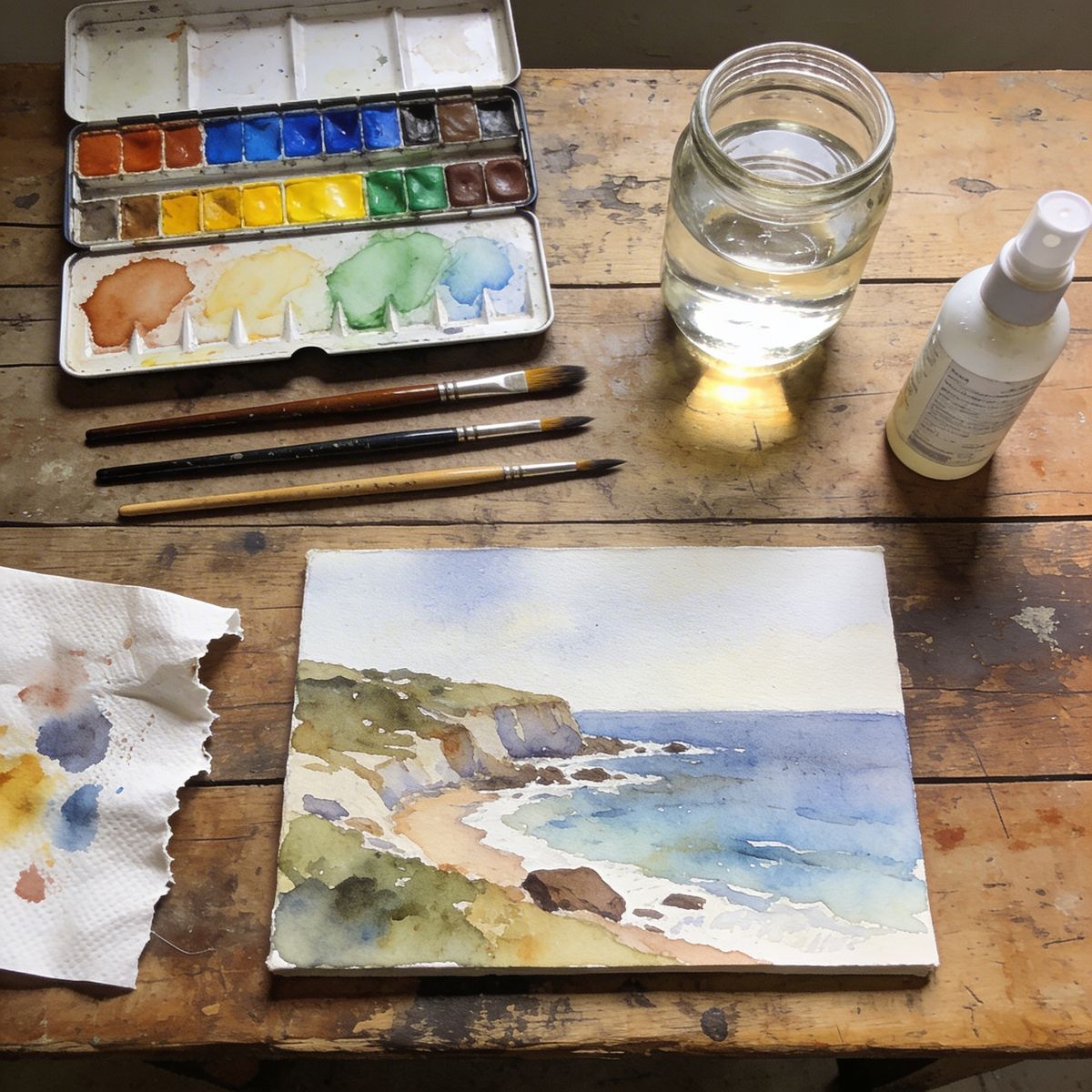
There is a physical reason watercolor possesses this quality that other media cannot replicate. In oil painting or acrylic, pigment sits on top of the surface and light bounces off it. In watercolor, pigment is suspended in transparent washes, and light passes through the pigment, hits the white paper beneath, and reflects back through the colour again. The paper itself becomes the light source.
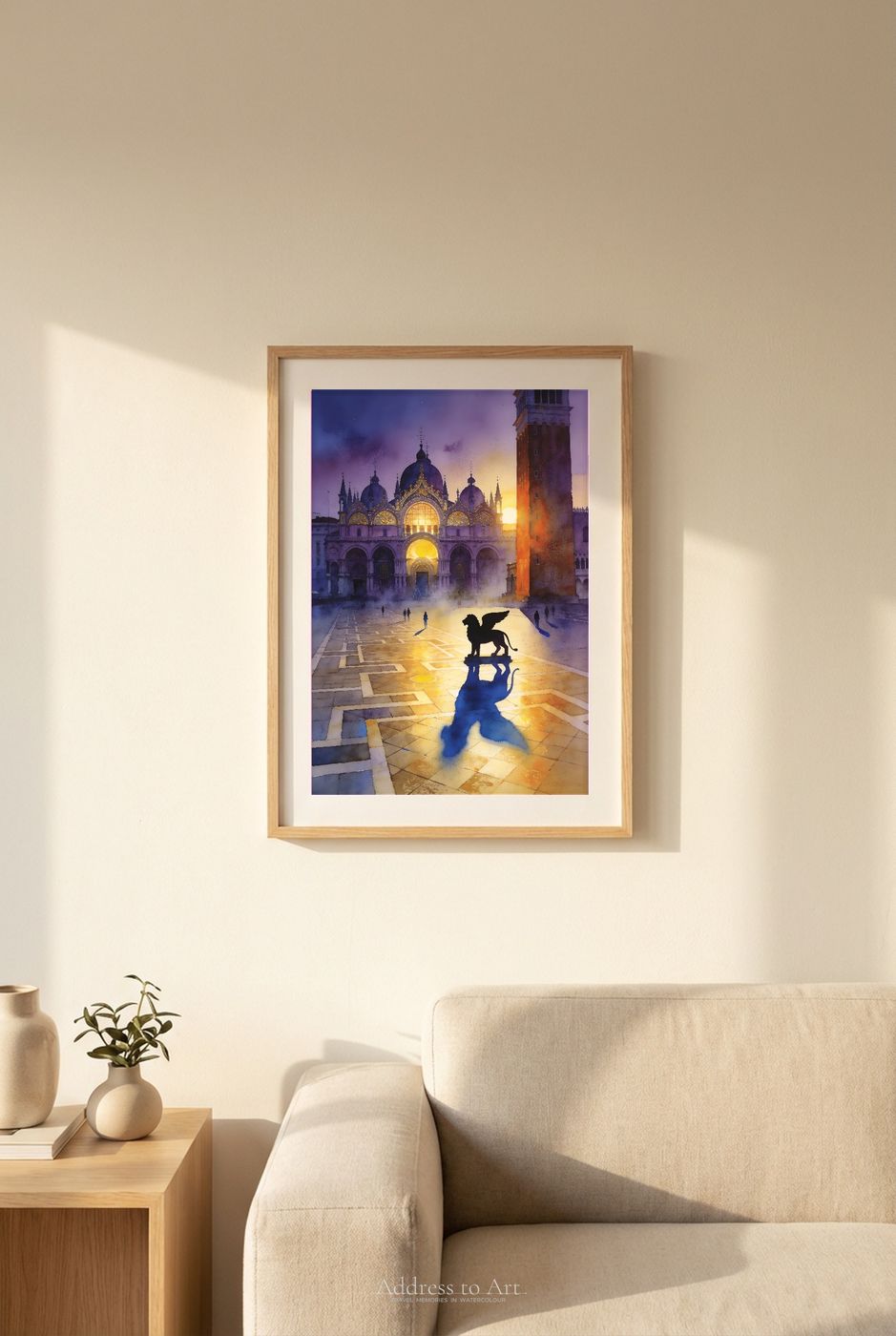
This is why watercolors glow. It is why a watercolor of Venice at golden hour possesses a luminosity that feels alive in a way that even the finest oil painting does not. The light in the painting is behaving the way light actually behaves in Venice — bouncing off water, filtering through atmosphere, arriving at your eye already softened and warmed by its journey.
The great watercolourists understood this. Turner built his late works entirely on this principle — dissolving the solid world into veils of light and colour. When you stand in front of a Turner watercolor of Venice, you do not see buildings. You see the light that touches them. That is precisely how you remember Venice, too.
A photograph captures a moment. A painting captures a feeling.
The deepest argument for watercolor over photography is not technical but emotional. A photograph is tied to a specific fraction of a second. It captures what was in front of the lens at 1/250th of a second on a Tuesday afternoon. It is forensically accurate and emotionally flat.
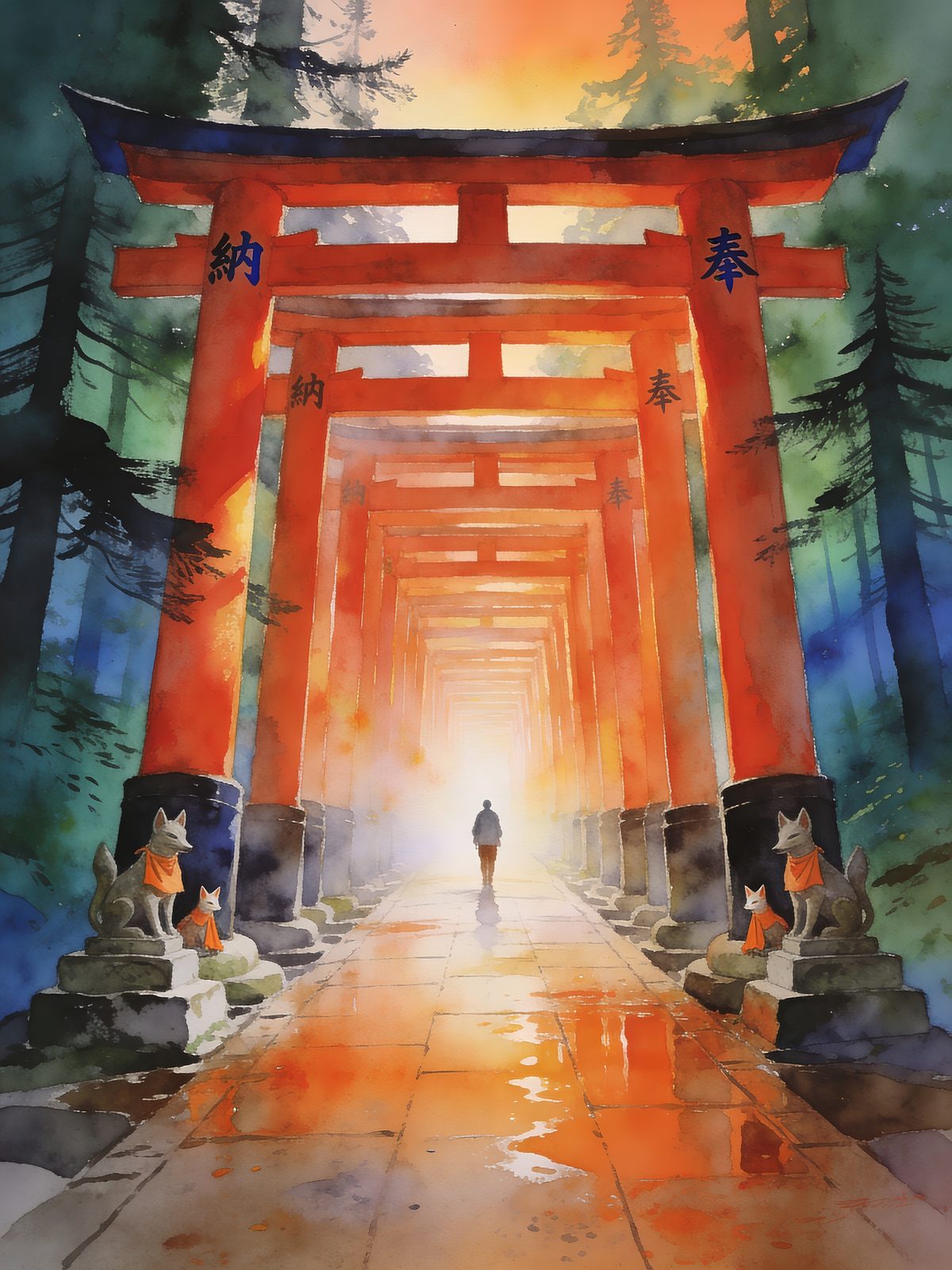
A painting is different. A painting of Kyoto's Fushimi Inari does not record a moment — it synthesises an experience. The warm vermillion of the torii gates, the dappled light filtering through maple leaves, the sense of ascending through layers of quiet — these are not details that exist in a single frame. They are the accumulated impression of an hour, a day, a lifetime of thinking about what that place meant to you.
A photograph says “I was here.” A watercolor says “This is how it felt to be here.”
This is why watercolor prints have become the most meaningful form of travel art. Not because they replace photographs — they do not — but because they do something photographs cannot. They capture the emotional residue of a place. The warmth of Amalfi. The stillness of Kyoto. The chaos and colour of Marrakech. The way London looked on the evening you decided to change your life.
When you personalise a watercolor print with a name, a date, and the GPS coordinates of the place where your story happened, you are not decorating a wall. You are anchoring a feeling to a physical object. You are giving memory a permanent address.
And that, in the end, is what art has always been for.